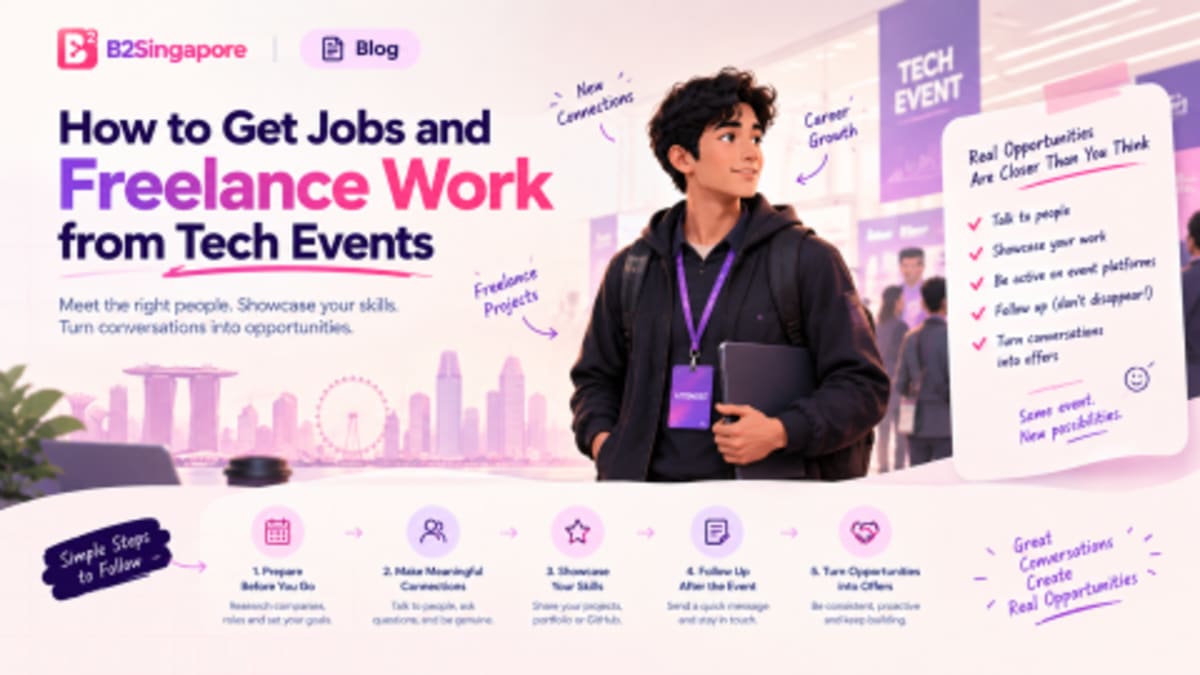

Almost everyone feels a little awkward walking into a room full of strangers. The person who looks completely at ease by the coffee table is often just as nervous as you are. They have simply learned a few habits that make it easier. Singapore has one of the busiest tech event calendars in Asia, from large conferences to small weekly meetups, so there are plenty of chances to practise. You can find them all in one place on b@singapore, and this guide will help you make the most of each one.
Start with the Right Mindset
Networking sounds like a performance, as if you must impress everyone and leave with a stack of business cards. In reality, it is simply having conversations with people who share your interests. Nobody expects you to be a polished speaker or a natural extrovert. They expect you to be curious and friendly, and anyone can do that. Once you stop treating it as a test, much of the pressure disappears.
Prepare Before the Event
Preparation is the best cure for nerves. Read the agenda and look at the speaker list before you go. Pick two or three people or topics you genuinely want to learn about, and think of a question or two you could ask. Many events listed on b@singapore share their themes and speakers in advance, so you can walk in already knowing who is worth finding. If the organisers share a guest list or attendee group, look up a few names on LinkedIn so you have something specific to talk about. Having a purpose changes how you feel in the room. Instead of wandering around hoping something happens, you are looking for specific conversations.
Plan Your Introduction
Many people freeze when someone asks, "So, what do you do?" because they have never said the answer out loud. Prepare a simple two-sentence introduction covering who you are, what you work on, and what you are curious about right now. Keep it natural rather than a sales pitch. A student might say, "I'm studying data science and building a small project on recommendation systems, so I'm here to learn how companies use AI in practice." That gives the other person something to respond to and keeps the conversation moving.
Arrive Early
The first twenty to thirty minutes of any event are the easiest time to meet people. The room is still small, attendees are waiting for things to start, and nobody has settled into a group yet. Walking into a crowded hall halfway through is far more intimidating than being there as it fills up. Arriving early also gives you time to collect your badge and get comfortable with the space before it gets busy.
How to Start a Conversation
Keep it simple. You do not need a clever opening line. Questions like "What brought you to this event?" or "Which session are you most looking forward to?" work almost every time, because they invite the other person to talk about something they care about. Most people enjoy being asked about their work, and once they start sharing, the pressure on you drops. Listen properly and ask a follow-up question based on what they said. People rarely remember what you told them, but they remember someone who was genuinely interested in them.
Who to Approach
Someone standing alone is usually happy to be spoken to, since they are probably feeling the same way you are. Groups of two or three are also approachable. Stand nearby, wait for a natural pause, and say something short like "Mind if I join you?" Most people will gladly make space. If a group is deep in a private discussion with closed body language, simply move on. It is not personal, and there are plenty of other conversations to join.
Use the Event as Your Icebreaker
A talk you just attended, a demo at a booth, or even the queue for coffee gives you something shared to talk about. "What did you think of that last session?" is much easier than starting from nothing, and it often leads to a deeper conversation. Panel discussions and workshops are especially good for this because everyone has just had the same experience.
Choose Quality Over Quantity
One of the biggest mistakes new attendees make is trying to speak to as many people as possible. It is exhausting and rarely leads to anything useful. Aim for three or four meaningful conversations instead. One genuine connection with someone who remembers you is worth more than thirty quick handshakes. If you find you have little in common with someone, that is fine. Move on politely and save your energy for the conversations that matter.
Look After Your Energy
Events can be tiring, especially if you are introverted or attending alone. It is perfectly normal to step outside for a few minutes, drink some water, or take a short walk. A break does not mean you are failing at networking. It means you are pacing yourself so you can return fresh and have better conversations. Setting a small goal, such as talking to three people before the first break, can also make the day feel manageable.
How to Leave a Conversation Politely
Many people stay trapped in a chat they want to end because they do not know how to exit gracefully. The answer is to be polite and direct. Something like "It was great meeting you. I'm going to grab a coffee and say hello to a few others. Let's connect on LinkedIn" works perfectly. Nobody will be offended, because everyone understands that you are there to meet several people. If you can introduce someone to another person on your way out, even better. Connecting people is one of the best ways to be remembered as someone helpful.
Business Cards and Contact Details
Rather than handing out cards to everyone, share your details only with people you actually want to stay in touch with. Offering to connect on LinkedIn on the spot is quick and saves you from losing a paper card later. After a good conversation, write a short note on your phone about what you discussed so you can remember it when you follow up.
Follow Up After the Event
The follow-up is where real networking happens. Many people have good conversations at events and never speak again, which wastes the effort. Within a day or two, send a short, specific message. Mention something from your chat, such as "Really enjoyed our conversation about AI in fintech. I'd love to stay in touch, and I'm happy to share that article I mentioned." Keep it friendly and brief, and avoid asking for favours right away. If it makes sense, suggest a quick coffee or call. This small step turns a brief meeting into a lasting professional relationship, and over time those relationships can lead to new opportunities, collaborations, and friendships.
Where to Find Events and Resources
The easiest way to start is to browse the upcoming professional and tech events on b@singapore. You can compare dates, topics, and formats in one place, from large flagship conferences to small community meetups, and choose the ones that suit your goals. Large events are worth planning for early, since they draw founders, investors, and professionals from across the region. Check the listings regularly, because new events are added often, and save the ones that match your interests so you never miss a date.
Wrapping Up: You've Got This
Networking does not require you to change your personality or pretend to be an extrovert. By setting low-pressure goals, preparing a few simple icebreakers, and knowing how to leave a conversation gracefully, you can walk into any tech event with real confidence.
The next time you step into a crowded venue, remember that most people are simply waiting for someone else to say hello first. Why not let that person be you? Browse the latest events on b@singapore and pick your first one today.
What about you? What is your biggest hurdle when it comes to networking at tech events? Let us know in the comments below!