You have just left a great tech event. Your head is full of ideas, your phone is full of new contacts, and by tomorrow the details will start to fade. The best way to keep the value of the day is to write about it. A short post on the b2singapore feed helps other professionals decide which events are worth attending, and it helps you stay visible to the people you just met. You do not need to be a writer to do it well. This guide shows you how.
Why Post After an Event
A post turns a passing experience into something lasting. Writing down what you learned helps you remember it, and it shows others what you care about and what you are working on. For people who could not attend, your post is a useful summary. For people deciding whether to go next time, it is honest advice from someone who was there. It also gives the people you met a reason to remember you and a simple way to reconnect.
Post While It Is Fresh
Write your post within 24 hours, ideally on the same evening or the next morning. Your memory is sharpest right after the event, and the conversation around it is still active. If you wait a week, the moment passes and the post feels late. A few minutes on the way home is often enough to jot down the main points, and you can polish them later.
Start with One Clear Takeaway
Do not try to summarise the whole event. Pick the single idea, moment, or insight that stayed with you most and build your post around it. It might be a point from a keynote, a demo that surprised you, or advice from a conversation in the coffee queue. A post with one clear message is far easier to read and remember than a long list of everything you saw. Open with that takeaway in the first sentence so readers know straight away why the post is worth their time.
Share What You Learned
After your opening, explain the idea in simple words. Say what you heard or saw, why it matters, and how you plan to use it. For example, "I learned that small teams are moving from building AI models to connecting existing ones, and I am going to try this approach in my next project." Specific details like this make your post more useful than general praise such as "Great event, learned a lot." Readers want to know what you actually took away.
Add a Personal Moment
What makes your post different from an official summary is your own experience. Add a small human detail, such as the nervous moment before you introduced yourself, a question that led to a good conversation, or something that changed your mind. Personal moments make a post warm and relatable, and they encourage other people, especially first-timers, to attend their own events. Be honest. A post that admits "I almost skipped this event, and I am glad I did not" is more engaging than a polished highlight reel.
Mention People and Organisers
Give credit where it is due. Thank the organisers for putting the event together, and mention speakers or attendees whose ideas or conversations stood out. Specific thanks, such as "Thank you to the speaker on the AI panel for the practical advice on evaluation," are far more meaningful than a general "thanks to everyone." Always be respectful and accurate when you mention people, and avoid sharing anything private that was said in a closed conversation. Being generous with credit makes people happy to engage with your post and helps you build goodwill in the community.
Keep It Short and Easy to Read
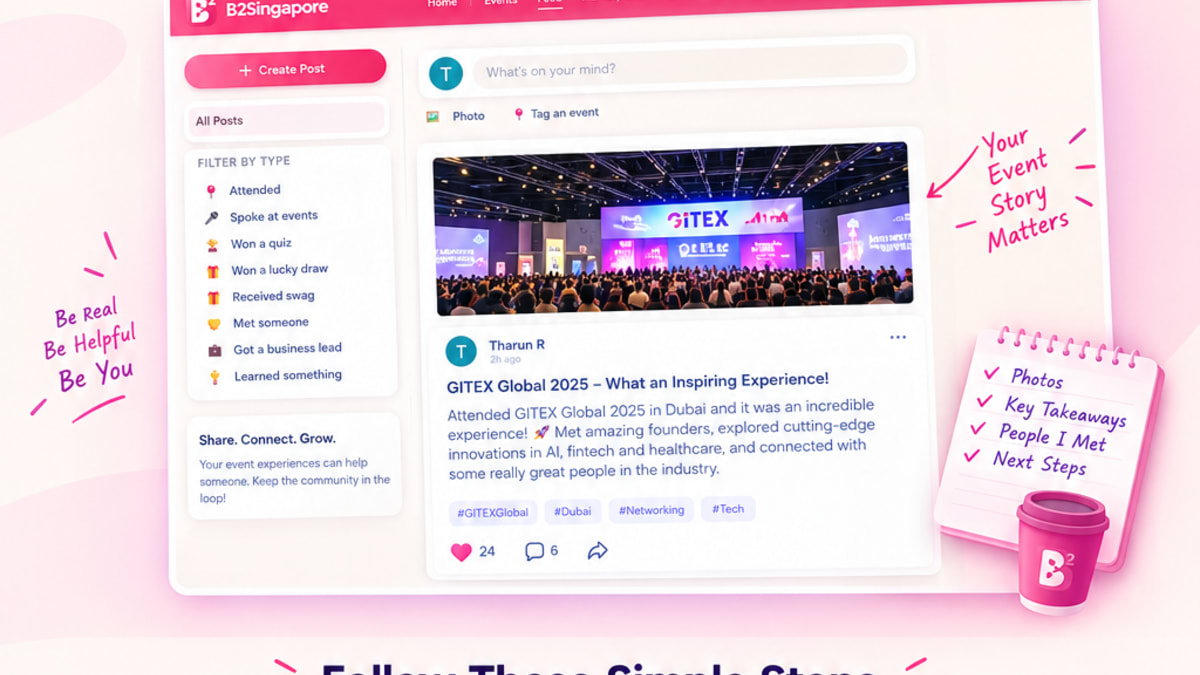
A good feed post is usually between 100 and 200 words. Use short sentences and short paragraphs, with a blank line between each one so the post is easy to scan on a phone. Avoid jargon unless your audience will clearly understand it, and write the way you would explain the event to a colleague over coffee. If you find yourself writing a long post, ask whether it would work better as a separate blog article, and keep the feed post to the main idea.
Add a Photo
A photo makes your post more noticeable and more real. Good choices include the stage, a slide with a key idea, a booth demo, or a group of attendees. Make sure the photo is clear and well lit, and only include people who would be comfortable appearing in it. If you are sharing a photo of a slide, check that the event allows it. A simple, honest photo works better than a heavily edited one.
Invite a Conversation
End your post with a question or an invitation so that readers have something to respond to. You might ask, "What was your biggest takeaway from the event?" or "Which session should I attend next?" or "If you were there, say hello." A closing question turns your post from a one-way announcement into a discussion, and replies are often where new connections begin. When people respond, reply promptly and kindly.
A Simple Post Template
If you are not sure where to start, fill in this short structure with your own words:
Just attended [event name] in Singapore. My biggest takeaway was [one clear idea]. It stood out because [why it matters to you]. I also enjoyed [a personal moment or conversation]. Thank you to [organisers or speakers] for [specific thing]. What was your favourite moment from the event?
You can edit it freely. The aim is to give you a starting point, not a script, so make sure the final post sounds like you.
Mistakes to Avoid
The most common mistake is writing a generic post that could apply to any event. Avoid vague lines such as "Amazing event, met great people," and add at least one detail. Do not turn the post into a sales pitch for your product or services, because readers can tell, and it puts people off. Avoid criticising individuals or organisers in public, and if you have honest feedback, share it constructively and politely. Finally, do not forget to proofread. A quick read for spelling and names takes a minute and protects your credibility.
Frequently Asked Questions
How long should my post be after an event?
Aim for 100 to 200 words. That is enough to share one clear takeaway and a personal detail without losing the reader.
How soon should I post after the event?
Within 24 hours is best, while the experience is fresh and people are still talking about it.
What if I did not enjoy the event?
You can still post. Focus on what you learned, stay respectful, and give constructive feedback rather than complaints. Honest and kind posts help others decide whether the event suits them.
Do I need to include a photo?
No, but a photo makes your post more engaging. Use a clear image and make sure everyone in it is comfortable being shared.
Can I post if I only attended part of the event?
Yes. Share what you saw and learned, and say clearly which session or part you attended.
Where can I find events to write about?
Browse upcoming professional and tech events on b2singapore, then share your experience on the feed afterwards.
Wrapping Up: Your Voice Matters
You do not need to be an expert or a professional writer to write a good event post. Pick one takeaway, add a personal touch, thank the people who made it happen, and end with a question. A few honest lines can help someone else decide to attend their first event, and they keep you connected to the community you just joined.
So after your next event, take five minutes before you go to bed and write that post. Find your next event on b2singapore and share your experience on the feed.
What about you? What do you find hardest about writing after an event? Let us know in the comments below!